
Anxiety in Adolescents: A Comprehensive Guide for Families, Educators, and Young People
Take Anxiety Assessment Test
Get StartedWhat Teen Anxiety Is and Why It Matters
Adolescence is a period of rapid brain development, identity exploration, and shifting social norms, so it is no surprise that worry, stress, and mood fluctuations ebb and flow. Concern arises when fear outpaces real-world risk, routines shrink to avoid discomfort, and school, friendships, or sleep start to suffer. This guide brings clarity to a complex topic and spotlights practical steps families and educators can take to support resilience without pathologizing normal growing pains.
Psychologists describe anxiety as an interplay of body sensations, catastrophic thinking, and habits that keep stress cycles alive, such as reassurance seeking or procrastination. Many families first encounter terms like anxiety teens during late-night research for answers, yet the concept becomes tangible when connected to specific behaviors, triggers, and coping patterns across everyday settings. The encouraging news is that timely support often restores confidence and momentum while strengthening core life skills.
While some fear is protective, skills-based strategies help adolescents decode bodily cues, challenge unhelpful thoughts, and expand healthy action. With puberty’s neurochemical shifts and academic expectations rising, teens anxiety can intensify around major transitions such as moving schools, joining new teams, or preparing for high-stakes exams. Early, compassionate conversations make it easier to build a toolkit before avoidance hardens into a habit.
- Understanding how stress works reduces uncertainty and boosts a sense of control.
- Learning coping tools enhances focus, sleep quality, and emotional balance.
- Collaborating with supportive adults strengthens safety nets and problem-solving.
- Addressing concerns early prevents spirals that derail school or social life.
How to Recognize Patterns and Warning Signs
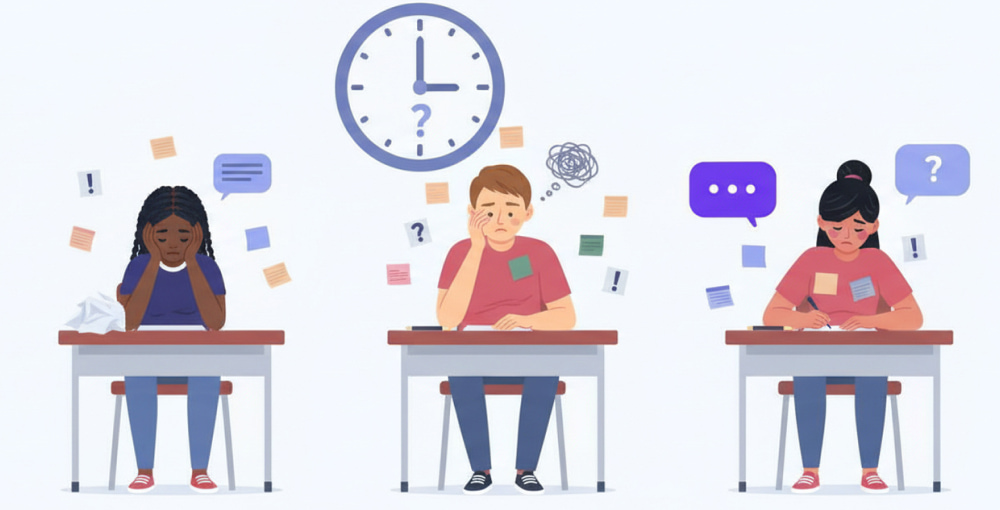
Recognition starts with noticing change: an outgoing student turning withdrawn, a diligent learner suddenly missing deadlines, or a steady sleeper lying awake for hours. Physical cues can include headaches, stomach aches, muscle tension, or fatigue. Cognitive signs often appear as perfectionism, intrusive “what-if” loops, or mental blanking during tests. Behavioral markers range from last-minute cancellations to avoidance of classes, cafeterias, or extracurriculars once enjoyed.
Patterns become clearer when tracked across contexts such as home, school, online spaces, and sports. Families often observe irritability, while teachers may spot difficulty concentrating or test-time jitters linked with anxiety symptoms teens across varied subjects and schedules. A simple daily log of stressors, thoughts, and actions can reveal triggers and the small wins that indicate progress.
When worry spreads across many domains and persists for months, clinicians may evaluate for broad-based conditions such as generalized anxiety disorder teens as part of a thorough clinical picture. Regardless of labels, a skills-first approach, breathing practices, exposure steps, and healthy routines, typically helps students reclaim routines and rebuild agency. Collaboration among caregivers, educators, and health professionals ensures observations translate into tailored plans.
- Physical: restlessness, rapid heartbeat, sweating, nausea, or headaches
- Cognitive: rumination, catastrophizing, memory lapses, or indecision
- Behavioral: avoidance, reassurance seeking, irritability, or procrastination
Friendships, Classrooms, and the Social Maze
Peers influence confidence, belonging, and identity during adolescence, which can make social challenges feel outsized. Classroom dynamics add performance pressures: presentations, group projects, and timed debates can trigger surges in self-consciousness. The online world complicates matters further, extending comparison and feedback loops far beyond the school day.
Because fears are often context-specific, it helps to map social goals into graduated steps: attending for five minutes, asking one question, or greeting one classmate. For some students, crowded hallways or lunchrooms set off the cycle tied to social anxiety teens in ways that look invisible to others yet feel overwhelming inside. Bitesize exposure wins compound rapidly, especially when reinforced with compassionate coaching and realistic expectations.
Teachers can reduce barriers with predictable routines, opt-in participation formats, and feedback that rewards effort rather than flawless performance. In parallel, families can rehearse conversation starters and role-play tricky scenarios to build fluency. Over time, concrete practice reduces fear spikes linked with teens social anxiety and helps adolescents rediscover curiosity, humor, and flexibility in everyday interactions.
- Use “low-stakes reps” like short check-ins, pair shares, or small-group roles.
- Offer alternatives to public spotlight moments, then scaffold gradual exposure.
- Celebrate process gains and normalize short-term discomfort during growth.
Family Bonds, Separation, and Common Triggers
Home is a powerful context for learning how to tolerate uncertainty. Warmth plus boundaries, sometimes called authoritative parenting, tends to nurture bravery while reducing conflict. Consistency matters too: shared language for coping, predictable routines, and clear problem-solving steps minimize confusion when stress climbs.
At specific ages, sleepovers, school trips, or new caregiver arrangements can activate worries related to separation anxiety teens as students test independence. Gentle practice with short stretches apart, coupled with agreed-upon check-ins, helps young people gain confidence while caregivers gain reassurance that growth is unfolding safely. The goal is not to banish fear but to support courageous action in manageable increments.
Some adolescents wrestle with overlapping presentations across categories commonly grouped as teens anxiety disorders in clinical resources, which can include panic, phobias, and selective mutism. Regardless of the mix, the roadmap remains similar: track patterns, teach skills, and expand meaningful activities. Families that align around shared strategies often see momentum reappear faster and with fewer power struggles.
- Set collaborative goals and define the smallest possible next step.
- Use brief, frequent exposures rather than rare, high-stress leaps.
- Balance empathy for distress with encouragement toward valued actions.
Screening, Tests, and Professional Assessment
When daily functioning is affected, a structured evaluation can clarify needs and guide support. Primary care providers, school counselors, and licensed therapists use interviews and rating scales to understand frequency, intensity, and impairment. Results then inform a care plan that may include skills training, therapy, school accommodations, or referrals for medical consultation.
Families sometimes begin with self-check tools to organize observations before an appointment, which is where phrases like anxiety test teens appear in guides and clinic websites as a starting point. These tools are not diagnostic on their own, yet they can highlight patterns worth discussing with a professional who knows adolescent development well.
In social contexts, clinicians may blend interviews with validated screeners and observations, an approach often summarized as a social anxiety assessment teens performed over multiple sessions. Combining data points, self-report, caregiver input, teacher perspectives, and behavioral observations, yields a fuller picture that reduces guesswork and builds trust.
| Screening Tool | What It Evaluates | Who Administers | Typical Time |
|---|---|---|---|
| SCARED | Broad anxiety domains and severity | Clinician, parent, or self-report | 10–15 minutes |
| GAD-7 (Youth) | Worry frequency and related impact | Clinician or self-report | 5 minutes |
| RCADS | Multiple anxiety and mood scales | Clinician or self-report | 15–20 minutes |
| SPIN | Social fear, avoidance, and discomfort | Clinician or self-report | 10 minutes |
| LSAS-CA | Social situations and performance fear | Clinician-led | 20–30 minutes |
- Share examples from school, home, and extracurriculars to improve accuracy.
- Ask how results translate into specific, trackable goals.
- Reassess periodically to ensure the plan stays aligned with progress.
FAQ: Quick Answers for Caregivers and Students
How do I know when worry needs professional attention?
Consider help when fear consistently shrinks routines, grades slide despite effort, or friendships fade because avoidance has taken over. A practical rule is to look for persistent impairment across settings over several weeks. If you’re unsure, a brief consult with a school counselor or pediatric clinician can clarify next steps and resources.
What treatments work best for anxious adolescents?
Cognitive behavioral therapy, exposure-based approaches, and skills training have the strongest evidence, often alongside lifestyle supports like sleep, movement, and nutrition. In some care plans, a physician may discuss medication options depending on severity and goals. Measurable, collaborative plans make it easier to celebrate small wins and adjust quickly when needed.
Are online quizzes useful or just clickbait?
Short screeners can organize thoughts and prepare you for a conversation with a qualified professional. For social concerns, many families encounter tools similar to social anxiety quiz teens while gathering information to bring into an appointment. Treat any score as a starting point rather than a diagnosis, and follow up with a practitioner who understands adolescent development.
How do I talk to my teen without escalating conflict?
Lead with curiosity, reflect what you hear, and ask for permission before offering suggestions. You might say, “On a 0–10 scale, how tough was that class today, and what helped even a little?” Collaborative questions reduce defensiveness and show respect for autonomy, which is central during adolescence.
What if symptoms look social but reach beyond shyness?
Shyness is common, but persistent avoidance that disrupts school, activities, or friendships warrants a closer look. Clinicians use careful interviews and observations when evaluating conditions categorized as teens social anxiety disorder to differentiate temperament from a treatable anxiety pattern. With a stepwise plan, most students regain participation and confidence without losing their authentic personality.